KCSA Exam Preparation: A Practical Guide to the Kubernetes and Cloud Native Security Associate
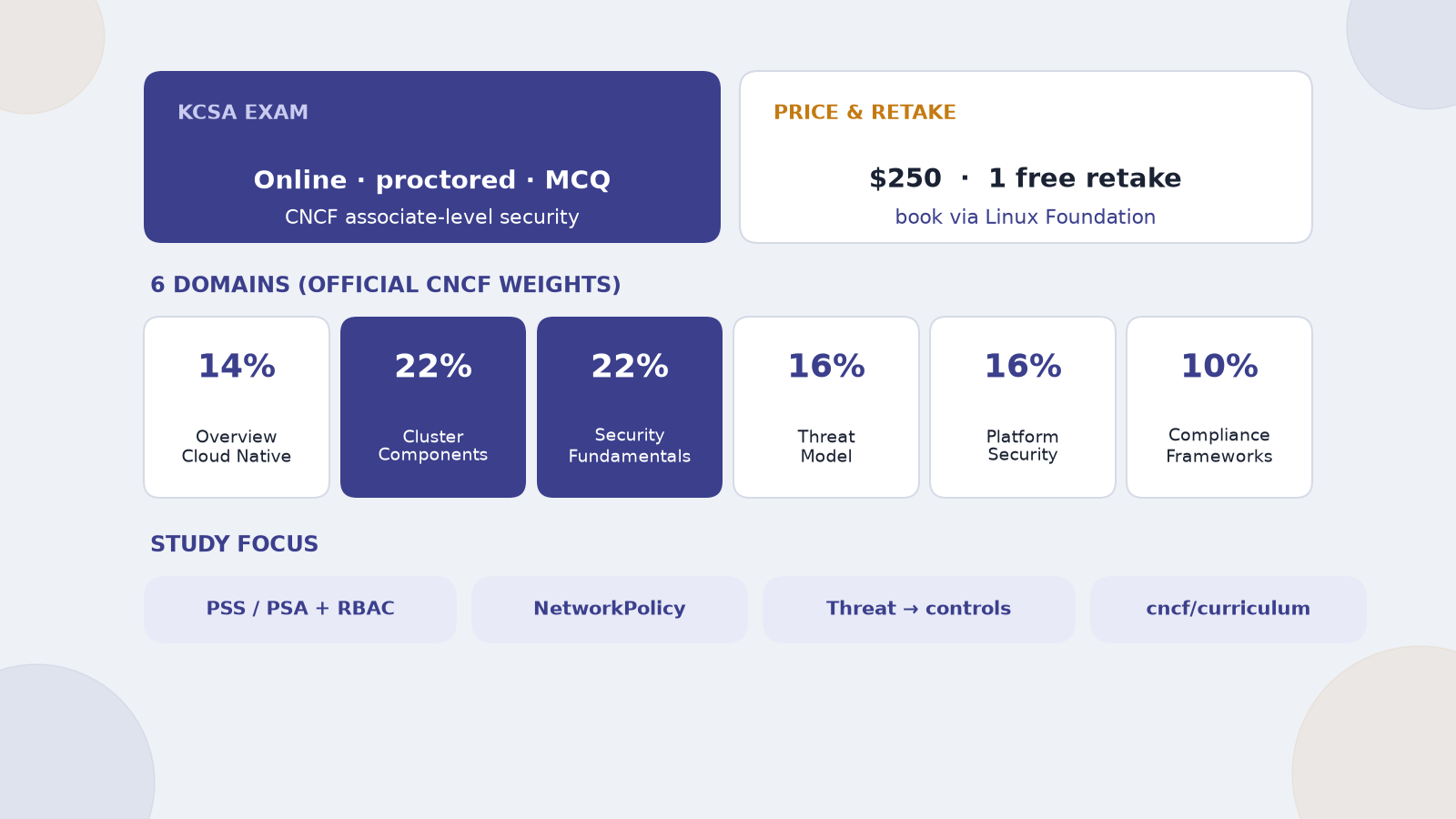
The KCSA exam (Kubernetes and Cloud Native Security Associate) is CNCF’s associate-level security cert for people who already know some Kubernetes and want a structured way into cluster hardening, threat models and compliance. It is online, proctored and multiple-choice, costs $250 with one free retake, and the open curriculum on GitHub is the real study map – not a vendor slide deck. If you came from Security+, CISSP study or AWS Security Specialty (SCS), the wording will feel familiar; the difference is that almost every question sits on Kubernetes components, policies and cloud native controls.
Read more
KCSA exam domains (official CNCF weights)
| Domain | Weight |
|---|---|
| Overview of Cloud Native Security | 14% |
| Kubernetes Cluster Component Security | 22% |
| Kubernetes Security Fundamentals | 22% |
| Kubernetes Threat Model | 16% |
| Platform Security | 16% |
| Compliance and Security Frameworks | 10% |
Cluster Component Security and Security Fundamentals share the lead at 22% each. That means API server, etcd, kubelet, runtime, Pod Security Standards/Admission, RBAC, Secrets and NetworkPolicy do most of the scoring. Overview (4Cs, isolation, image and workload security) and Compliance are lighter, but they show up as scenario framing more often than people expect.
What the format actually is
Unlike CKA/CKAD/CKS, KCSA is not a live cluster lab. CNCF describes it as an online, proctored, multiple-choice exam. Price is $250 and the fee includes one free retake. Confirm duration and question count on the booking page when you schedule – Linux Foundation and CNCF pages have shifted those numbers before. Book through the Linux Foundation Training site linked from the CNCF KCSA page.
How I would study it
- Start with the open curriculum PDF in cncf/curriculum. Treat every bullet as a flashcard, not a chapter title.
- Build a tiny cluster and break it on purpose. Apply a Restricted Pod Security Standard, deny egress with NetworkPolicy, rotate a ServiceAccount token audience, and read an audit event. Reading about RBAC without binding a Role never sticks.
- Map threats to controls. For each STRIDE-style risk in the Threat Model domain (persistence, DoS, privilege escalation, network attacker), name the Kubernetes control that stops it.
- Platform and supply chain last. Image signing, admission webhooks, basic service mesh and PKI ideas sit in Platform Security – enough to choose the right control, not to design Istio from scratch.
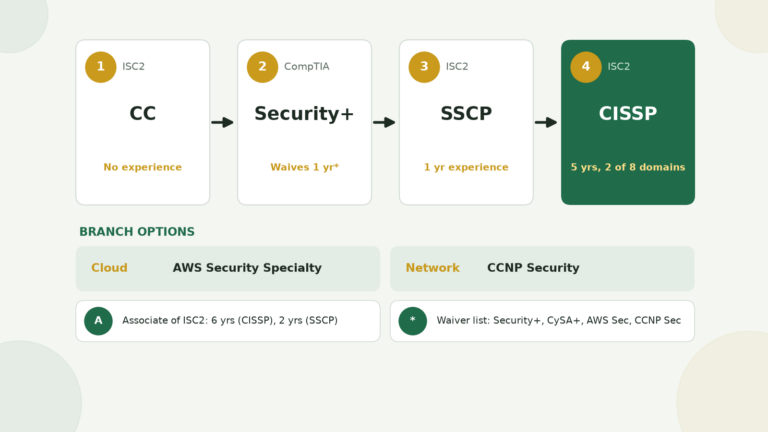
I treat KCSA as the cloud native companion to the broader security path we already cover – our Security+ SY0-801 notes, the CISSP certification path, and the AWS SCS-C03 guide. Same security instincts, different control plane.
Practice
Try our KCSA practice exam. The $1 trial is deducted when you upgrade, and every plan has a 14-day money-back guarantee. Or start with the sample exam quiz.
Sources: the official CNCF KCSA page (domain weights, format, $250 with one free retake) and the open CNCF curriculum. Always recheck those pages before you book.